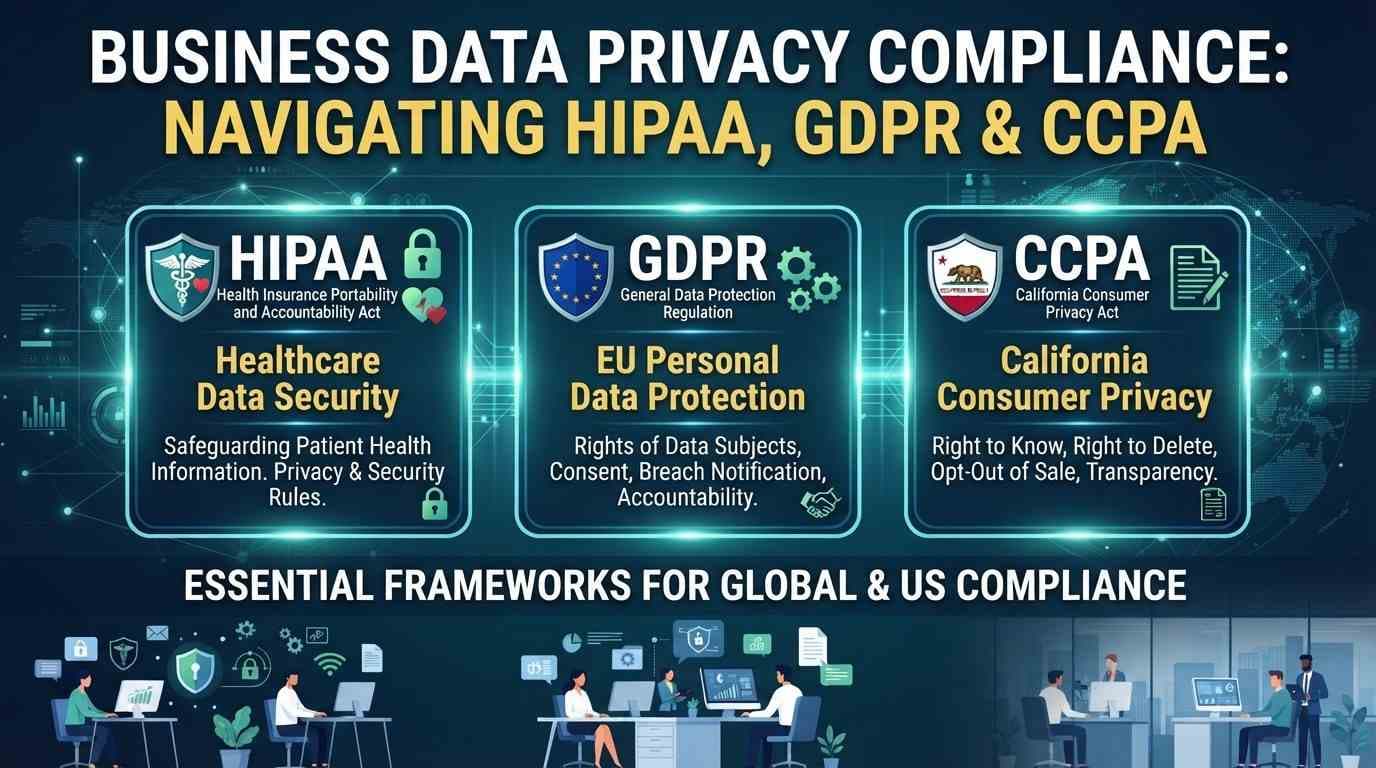
Business Data Privacy and Compliance: HIPAA, GDPR, PCI DSS, and CCPA/CPRA
Businesses collect and manage large amounts of information every day, from customer contact details and employee records to financial transactions and confidential business documents. While this information supports daily operations, it also creates responsibilities for protecting sensitive data and maintaining privacy.
Data privacy compliance helps businesses understand how personal and sensitive information should be collected, stored, processed, accessed, and protected. Depending on their industry, location, and business activities, organizations may need to follow regulations and security standards such as HIPAA, GDPR, PCI DSS, and CCPA/CPRA.
Failing to meet applicable requirements can expose businesses to regulatory penalties, financial losses, security incidents, and reputational damage.
For small and growing businesses, understanding these requirements is an important part of building a secure IT environment. This guide explains the major data protection regulations, their business implications, and the cybersecurity practices organizations can implement to strengthen data protection.
What Is Data Privacy Compliance?
Data privacy compliance refers to following applicable laws, regulations, and standards governing how organizations collect, use, store, process, and protect information.
These requirements are designed to protect personal information, prevent unauthorized access, establish accountability, and give individuals greater control over how their data is handled.
Depending on the organization, protected information may include:
Customer names, addresses, and contact details
Financial and payment card information
Employee and payroll records
Medical and healthcare information
Login credentials and authentication details
Personal identification information
Business records containing confidential data
Data privacy compliance involves more than installing security software. Businesses must also establish appropriate data handling policies, control access to sensitive information, train employees, maintain documentation, and respond to security incidents.
Why Is Data Protection Compliance Important for Businesses?
Data protection is both a cybersecurity responsibility and a business priority. Organizations that handle personal or financial information need appropriate safeguards to reduce exposure and maintain customer confidence.
Here are some key reasons why compliance matters.
1. Protects Sensitive Business and Customer Information
Businesses often store information that could be misused if exposed. Strong data protection practices help prevent unauthorized access, accidental disclosure, identity theft, and financial fraud.
2. Reduces Legal and Regulatory Risks
Applicable privacy laws and industry standards establish requirements for protecting information. Failure to meet these obligations can result in investigations, penalties, legal claims, and other consequences.
3. Builds Customer Trust
Customers expect businesses to handle their personal information responsibly. Transparent privacy practices and appropriate security measures demonstrate accountability and help strengthen long-term relationships.
4. Strengthens Cybersecurity
Compliance encourages businesses to review their security controls, identify vulnerabilities, manage user permissions, and establish procedures for protecting sensitive information.
5. Supports Business Continuity
Data protection measures such as secure backups, access controls, and incident response planning help businesses recover from security incidents and reduce operational disruption.
What Are the Major Data Protection Regulations Businesses Should Know?
Several data protection regulations and security standards govern how organizations handle sensitive information. Their applicability depends on factors such as business location, industry, revenue, customer base, and the type of data being processed.
Understanding the differences is essential for identifying which requirements apply to your organization.
1. What Is HIPAA Compliance?
The Health Insurance Portability and Accountability Act (HIPAA) is a United States federal law that establishes requirements for protecting certain health information.
HIPAA primarily applies to covered entities, including healthcare providers, health plans, and healthcare clearinghouses, as well as business associates that handle protected health information on their behalf.
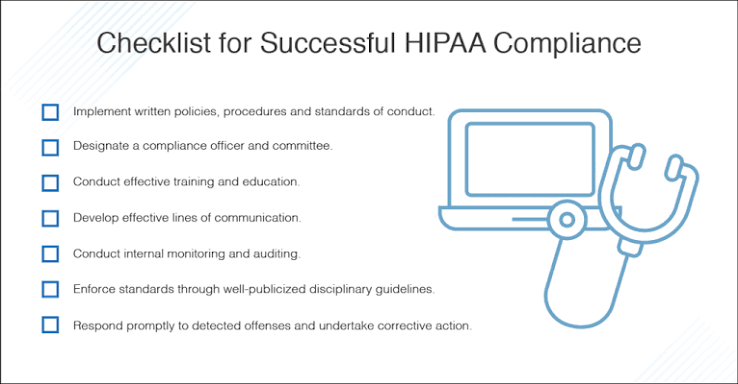
The HIPAA Privacy Rule governs the use and disclosure of protected health information (PHI), while the Security Rule establishes safeguards for electronic protected health information (ePHI).
Key HIPAA protection requirements include:
Limiting access to protected health information
Implementing appropriate administrative safeguards
Using technical security controls
Protecting electronic health records
Conducting risk assessments
Maintaining appropriate security policies and procedures
For businesses working with healthcare organizations, understanding their responsibilities when handling protected health information is essential.
Example: An IT service provider managing systems that store electronic patient records may qualify as a HIPAA business associate and have specific contractual and regulatory responsibilities.
2. What Is GDPR Compliance?
The General Data Protection Regulation (GDPR) is a European Union regulation governing the processing and protection of personal data.
It applies to organizations established in the EU and can also apply to organizations outside the EU that offer goods or services to individuals in the EU or monitor their behavior there.
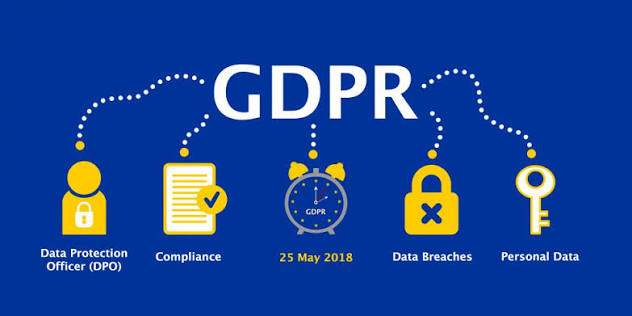
GDPR establishes requirements for how personal information is collected, processed, stored, and shared.
Important GDPR principles include:
Lawfulness, fairness, and transparency: Personal data must be processed lawfully and transparently.
Purpose limitation: Information should be collected for specified and legitimate purposes.
Data minimization: Organizations should only collect information they actually need.
Accuracy: Personal data should be accurate and kept up to date.
Storage limitation: Information should not be retained longer than necessary.
Integrity and confidentiality: Appropriate security measures should protect personal data.
GDPR also establishes rights for individuals, including rights relating to accessing, correcting, and deleting their personal information, subject to applicable conditions and exceptions.
Example: A California-based business offering services to customers in the European Union may need to evaluate whether GDPR applies to its data processing activities.
3. What Is PCI DSS Compliance?
The Payment Card Industry Data Security Standard (PCI DSS) is a set of security requirements designed to protect payment card information.
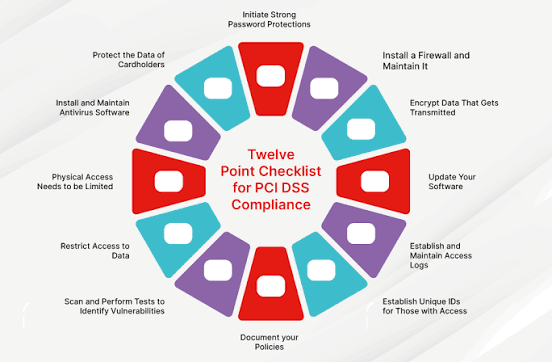
It applies to organizations that store, process, or transmit cardholder data, as well as service providers that can affect the security of payment card data environments.
Unlike HIPAA and GDPR, PCI DSS is an industry security standard rather than a government privacy law. Its requirements are generally enforced through payment card industry relationships and contractual obligations.
Key PCI DSS security requirements include:
Installing and maintaining network security controls
Protecting stored account data
Encrypting cardholder data during transmission
Maintaining secure systems and software
Restricting access to cardholder information
Monitoring and testing network security
Maintaining an information security policy
Example: A retail business that accepts card payments must ensure that its payment processing environment meets the applicable PCI DSS requirements.
4. What Is CCPA and CPRA Compliance?
The California Consumer Privacy Act (CCPA), as amended by the California Privacy Rights Act (CPRA), establishes privacy rights for California consumers and obligations for businesses covered by the law.
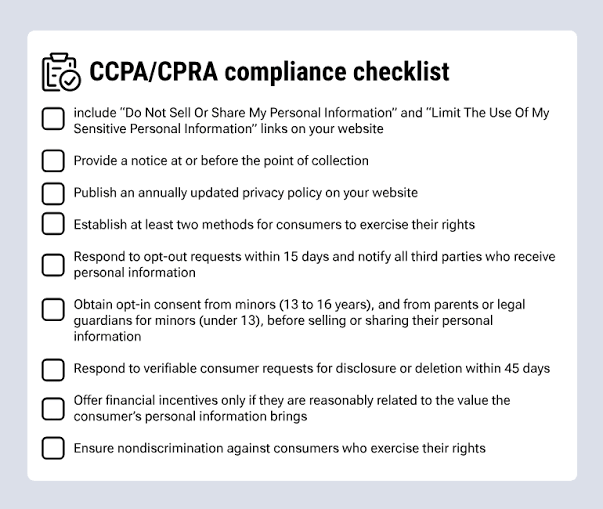
The CCPA gives eligible California consumers rights concerning their personal information, including:
The right to know what personal information is collected and how it is used
The right to request deletion of certain personal information
The right to correct inaccurate personal information
The right to opt out of the sale or sharing of personal information
The right to limit certain uses and disclosures of sensitive personal information
The right to receive information about privacy practices
The law does not automatically apply to every business operating in California. Applicability depends on statutory criteria, including business activities and applicable revenue or data-processing thresholds.
For businesses operating in Mountain View, San Jose, Palo Alto, and other California communities, understanding these requirements is particularly relevant when collecting or processing consumer information.
Example: A California business that meets the CCPA's applicability criteria may need to provide privacy notices, establish consumer request procedures, and maintain appropriate data handling practices.
HIPAA vs. GDPR vs. PCI DSS vs. CCPA/CPRA: What Is the Difference?
Although these regulations and standards address data protection, they serve different purposes and apply to different types of organizations.
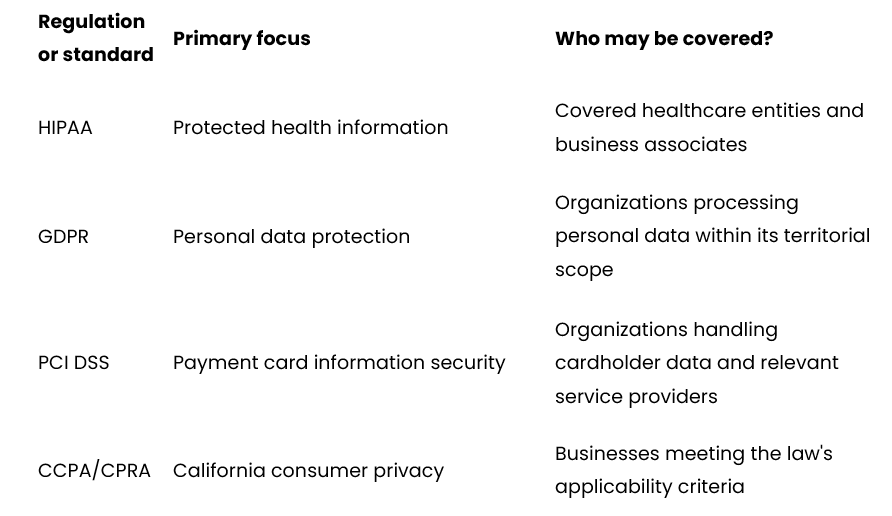
Businesses may be subject to more than one framework depending on their operations.
For example, a healthcare organization that accepts card payments and processes information belonging to EU residents may need to evaluate multiple regulatory and security obligations.
The important distinction is that these requirements are not interchangeable. Meeting one standard does not automatically establish compliance with another.
What Happens When Businesses Fail to Meet Data Protection Requirements?
Failure to meet applicable privacy and security requirements can have consequences beyond the immediate cost of a cybersecurity incident.
Common risks include:
Financial Penalties and Legal Consequences
Regulatory authorities may impose penalties for violations, depending on the applicable law and circumstances. Businesses may also face legal claims, contractual disputes, and investigation expenses.
Data Breaches and Information Exposure
Weak security controls can increase the likelihood of unauthorized access, data theft, and accidental disclosure of sensitive information.
Loss of Customer Trust
Customers may reconsider their relationship with a business following an incident involving exposed personal or financial information.
Operational Disruption
Security incidents can interrupt business systems, delay services, affect employee productivity, and require extensive recovery efforts.
Reputational Damage
A failure to protect customer information can affect brand credibility and make it harder to establish new business relationships.
The consequences vary depending on the nature of the violation, the applicable requirements, and the organization's response.
How Can Businesses Maintain Data Privacy Compliance?
Maintaining compliance requires ongoing attention to data handling practices, cybersecurity controls, employee responsibilities, and regulatory changes.
The following practices can help businesses strengthen their data protection strategies.
1. Identify and Classify Sensitive Data
Start by identifying what information your organization collects, where it is stored, who can access it, and how it is shared.
Classifying data according to sensitivity helps businesses determine which security controls and access restrictions are necessary.
2. Implement Access Controls and Multi-Factor Authentication
Not every employee needs access to every business system or file.
Role-based access control helps limit permissions according to job responsibilities. Multi-factor authentication (MFA) adds another layer of identity verification, reducing the risk of unauthorized account access.
3. Encrypt Sensitive Information
Encryption helps protect information from unauthorized access when data is stored or transmitted.
Businesses should evaluate encryption requirements for sensitive files, databases, devices, backups, and communication systems.
4. Maintain Regular Software Updates
Outdated applications, operating systems, and network devices can contain vulnerabilities that attackers may exploit.
Establishing a patch management process helps businesses address known security weaknesses and maintain a more secure IT environment.
5. Conduct Regular Risk Assessments and Security Audits
Regular assessments help identify vulnerabilities, outdated systems, unauthorized access, and gaps in existing security procedures.
Businesses should review their IT infrastructure, user permissions, cloud configurations, and third-party access arrangements.
6. Train Employees on Data Protection
Employees should understand how to handle sensitive information, identify phishing attempts, use secure passwords, and report suspicious activity.
Ongoing awareness training helps reduce human error and encourages responsible data handling throughout the organization.
7. Establish Data Backup and Recovery Procedures
Secure backups help businesses recover important information following ransomware attacks, accidental deletion, or system failures.
Businesses should implement scheduled backups, restrict backup access, and regularly test recovery procedures.
8. Create a Data Breach Response Plan
A documented incident response plan helps businesses identify, contain, investigate, and recover from security incidents.
It should also define internal responsibilities and procedures for meeting applicable breach notification requirements.
How Do Managed IT and Cybersecurity Services Support Data Protection Compliance?
Managing IT security and data protection requirements can become increasingly challenging as businesses grow.
New employees, devices, applications, cloud platforms, and business locations introduce additional security considerations. Without consistent oversight, organizations may struggle to identify vulnerabilities and maintain appropriate controls.
Managed IT and cybersecurity services can help businesses strengthen their technical security practices through:
Proactive system monitoring: Monitoring business systems to identify unusual activity and potential security issues.
Endpoint protection: Securing business computers, servers, and connected devices against malware and other threats.
Network security management: Maintaining firewalls, access controls, and secure network configurations.
Patch management: Keeping operating systems and applications updated to address known vulnerabilities.
Access management: Reviewing user permissions and helping restrict access to sensitive business information.
Backup and recovery planning: Supporting data protection and business continuity through secure backups and recovery procedures.
Security assessments: Identifying technical weaknesses and recommending improvements to the IT environment.
These services can support an organization's broader compliance efforts, but they do not automatically guarantee regulatory compliance. Businesses must also address applicable legal, administrative, contractual, and operational obligations.
Business Data Protection and Cybersecurity Support in Mountain View and the Bay Area
Businesses across Mountain View, San Jose, Palo Alto, Sunnyvale, Cupertino, and the wider Bay Area depend on technology to manage customer information, communicate with teams, and operate securely.
As business IT environments become more connected, protecting sensitive information requires consistent system monitoring, secure network configurations, access management, and proactive maintenance.
Creative Tech helps businesses strengthen their IT environments through managed IT and cybersecurity solutions. From monitoring systems and managing security controls to identifying vulnerabilities, businesses can receive technical support to improve their overall security posture.
Creative Tech also supports businesses in Long Beach and surrounding service areas.
Whether your organization is improving its existing security infrastructure or planning for future growth, having a reliable IT management strategy can help reduce security risks and support business continuity.
Explore Creative Tech's Cybersecurity Solutions to learn more about protecting your business systems and information.
Conclusion
Data privacy compliance is an important responsibility for businesses that collect, process, or store sensitive information. Regulations and standards such as HIPAA, GDPR, PCI DSS, and CCPA/CPRA establish different requirements depending on the type of information handled and the organization's activities.
Understanding which requirements apply is the first step. Businesses must then establish appropriate data handling policies, implement technical safeguards, control access to sensitive information, train employees, and regularly assess their security practices.
For small and growing businesses, proactive IT management and cybersecurity can help strengthen data protection and reduce exposure to security incidents.
By treating data privacy as an ongoing business priority, organizations can better protect customer information, maintain trust, and build a more resilient IT environment.
Frequently Asked Questions
1. What is data privacy compliance?
Data privacy compliance means following applicable laws, regulations, and standards governing how businesses collect, process, store, share, and protect personal information.
2. Which data protection regulations apply to small businesses?
It depends on the business's location, industry, activities, and the information it handles. Relevant requirements may include HIPAA, GDPR, PCI DSS, and CCPA/CPRA.
3. What is the difference between HIPAA, GDPR, PCI DSS, and CCPA?
HIPAA protects certain health information, GDPR governs personal data processing within its scope, PCI DSS protects payment card data, and CCPA/CPRA establishes privacy rights for eligible California consumers.
4. Does CCPA apply to all businesses in California?
No. CCPA applies to businesses that meet specific statutory criteria, including applicable revenue or personal information processing thresholds, and other requirements.
5. How can businesses protect customer data?
Businesses can protect customer information through encryption, multi-factor authentication, access controls, secure backups, software updates, employee training, and regular security assessments.
6. What happens if a business violates data privacy regulations?
Depending on the applicable requirements and circumstances, businesses may face regulatory penalties, legal claims, investigations, operational disruption, and reputational damage.
7. How often should businesses conduct cybersecurity audits?
Businesses should conduct regular security assessments, establish an appropriate audit schedule, and review their controls whenever significant changes occur in their IT environment.
8. Can Managed IT Services help with cybersecurity compliance?
Yes. Managed IT Services can support compliance efforts through system monitoring, patch management, endpoint protection, access controls, backup management, and security assessments. However, technical support alone does not guarantee regulatory compliance.
9. Does Creative Tech provide cybersecurity services in Mountain View, CA?
Yes. Creative Tech provides managed IT and cybersecurity solutions for businesses in Mountain View and surrounding Bay Area communities, helping organizations strengthen network security and manage IT risks.
10. Why is data privacy important for small businesses?
Data privacy helps small businesses protect customer and employee information, reduce security risks, maintain customer trust, and meet applicable legal and contractual responsibilities.
Need Managed IT & Cybersecurity Solutions? Visit Creative Tech for a free diagnostic.